Wilderness First Aid: Essential Skills for Off-Track Bushwalking

Published
Last updated
Wilderness first aid is not "regular first aid with more gumption." Off-track and remote-adjacent walking changes how long help takes to arrive, how much you can carry, and how quickly heat and dehydration compound bad decisions.
This article offers orientation topics for North Queensland walkers planning Mount Stuart style days or longer regional trips. It does not replace an accredited first aid course, remote-area training, or advice from a qualified health professional.
The pattern injuries follow
Many preventable emergencies share a chain:
- Underestimate heat, humidity, or terrain pace.
- Small problem becomes immobilising (sprain, cramp, sting, exhaustion).
- Communication gaps delay accurate location reporting.
- Group stress amplifies errors-extra movement, poor shelter choices, unnecessary splitting.
Training helps you interrupt that chain early.
Before you pack the bandages
Competence beats cargo. A heavy kit with unused gadgets educates nobody.
Prioritise:
- Navigation and turnaround rules so you do not "push through" into nightfall with an injured party member.
- Communication plan: who knows your route and return window; what happens if you are late.
- Water discipline: capacity, purification backup where relevant, and electrolyte strategy matched to sweat rate-not trending powders.
Kit thinking (general)
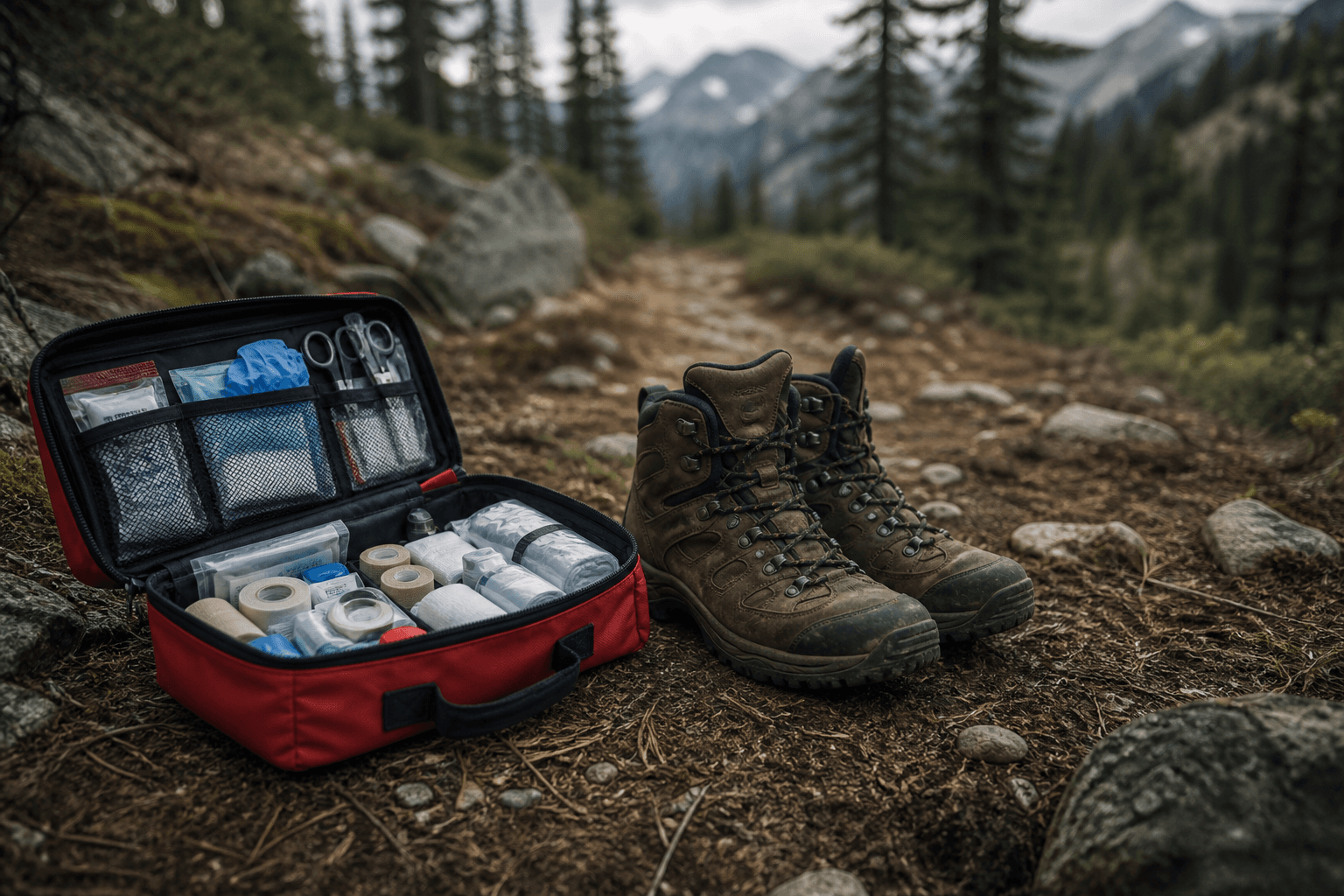
Most teams benefit from basics done well:
- Splinter/tick tools appropriate to region-check current guidance for tick removal from reputable Australian sources.
- Dressings and tape you have actually practised applying while sweaty.
- Shelter and warmth planning even in the tropics-hypothermia risk exists after storms, immobility, or night exposure.
Carry personal medications and document allergies plainly-especially for group walks where multiple hands might open kits under stress.
Snakes, stings, and regional hazards
North Queensland adds predictable complexity: marine stingers on coastal approaches in season, snakes on bush tracks, slippery rock near waterfalls, and flash flooding in storm cells.
Your best first aid is often avoidance-time of day, route choice, footwear, and patience.
When incidents occur, follow authoritative emergency guidance and call Triple Zero (000) when life-threatening signs appear-then stabilise within your training limits.
Evacuation judgement
Wilderness care sometimes means protecting the spine, controlling bleeding, managing temperature, and not moving someone when movement risks worse injury-balanced against imminent hazards like rising water.
Groups should agree on leadership and decision roles before crisis-debating egos during shock rarely ends well.
Fitness overlap
Better conditioning reduces fatigue-driven mistakes-see hiking fitness for North Queensland peaks for general preparation themes.
For organised trip culture and leader expectations, The Townsville Bushwalking Club illustrates how experienced North Queensland walkers frame risk.
Where to learn properly
Seek accredited first aid training from recognised Australian providers, and add remote or wilderness modules if you move beyond short mobile-coverage loops.
Refresh skills on a schedule-confidence without recency is a liability.
FAQ
Can I rely on this blog for medical decisions?
No. Use qualified trainers and clinicians for health decisions.
Should I buy a satellite messenger?
If you regularly walk beyond reliable phone coverage, emergency communication tools deserve serious consideration-still paired with navigation skill, not instead of it.
What if I walk alone?
Solo walking raises stakes-tighter route margins, earlier turnarounds, and conservative weather interpretation become non-negotiable.