Trail Running in Townsville: Transitioning from Pavement to Peaks

Published
Last updated
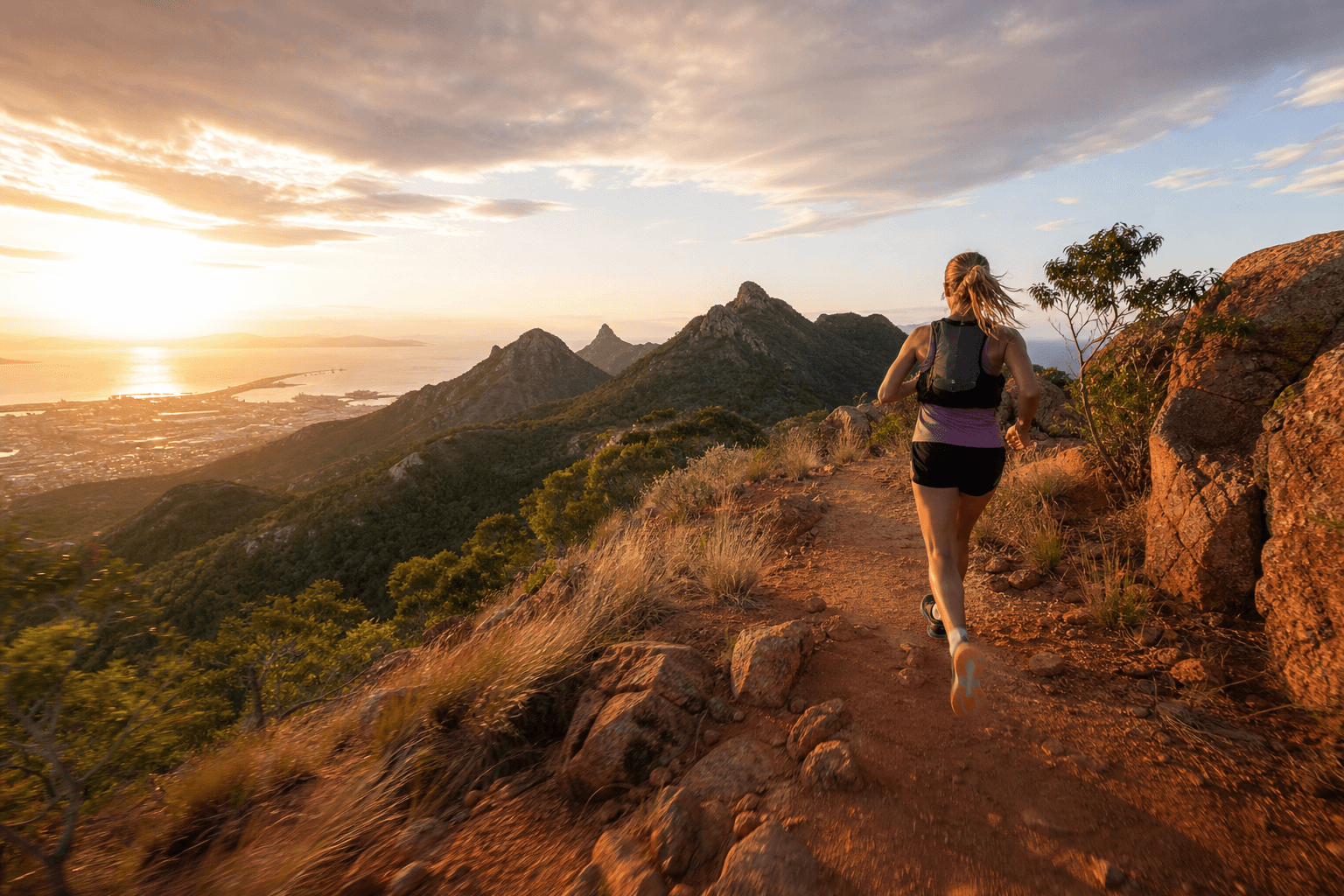
Moving from road running to trail running in Townsville is less about pace and more about environmental skill: humidity changes sweat rates, granite changes braking, and snakes change how you scan the ground ahead.
This guide is for runners who already jog comfortably on flat paths and want to train steep, technical terrain safely-without treating North Queensland heat like a mild inconvenience.
Heat and humidity first
Townsville's tropical conditions reward early sessions. Midday efforts stack dehydration risk faster than heart-rate zones imply-especially on exposed ridges.
Practical habits:
- Carry more fluid than temperate-climate habits suggest.
- Use electrolytes on heavy sweat days (trial them on shorter runs first).
- Wear breathable fabrics and a brimmed cap; sunscreen on arms and ears even on cloudy days.
If you feel dizzy, nauseous, or unusually irritable, stop, cool down, and shorten the route-heat illness is not something you "push through."
Footing: granite, grit, and tyres on shared paths
Townsville's popular hill terrain includes mixed surfaces: paved sections, worn dirt, and decomposed granite that can skid after rain or dew.
Trail-running technique adjustments:
- Shorter stride on descents; land with feet under your body.
- Scan ahead for loose gravel, sticks, and uneven steps-especially where walkers share the trail.
- Yield politely on narrow sections; bells or a calm verbal warning help everyone.
Shoes and grip
Road shoes can feel fast until a damp stair corner proves otherwise. Trail-oriented shoes with deeper lugs and stable toe boxes generally behave better on loose volcanic soils.
Rotate shoes so they dry fully between runs-humidity accelerates foam breakdown and increases blister risk.
Where runners commonly build vert (use our guides)
Castle Hill - structured repeats
Castle Hill is a common training hill close to town. Start with hiking familiarity before turning segments into runs:
- Castle Hill (Cutheringa) - Townsville for routes, pacing, goat-track culture, and heritage awareness
Use repeats conservatively: quality uphill mechanics matter more than chasing arbitrary lap counts in heat.
Mount Stuart - not a casual trail run
Mount Stuart's slopes include serious navigation and gorge-country hazards that punish improvisation. Read Mount Stuart hikes before treating any route as a runnable loop-many outings belong in fast hiking territory, not tempo runs.
Magnetic Island - ferry time budgets
If you run on Magnetic Island, treat ferry schedules as hard constraints. Our Magnetic Island walks guide explains logistics that runners ignore at their peril.
Strength work that actually helps trails
Two short sessions per week can reduce injury risk:
- Calf raises and eccentric heel drops for downhill durability
- Single-leg balance drills for ankle stability
- Core bracing so posture stays tall when fatigue arrives
This is general conditioning guidance-not personalised coaching.
Wildlife and etiquette
Run with awareness: snakes use the same warm corridors you do. Give wildlife space, avoid headphones at volume that blocks situational awareness, and remember dogs may be on-leash nearby on shared paths.
Pairing with structured walking volume
If you are new to consistent mileage, build easy walking volume first:
For physiology-focused progression framing (not medical advice), see Hiking fitness: preparing for North Queensland peaks.
Hill repeats without wrecking knees
If you add structured repeats, keep recovery days honest:
- Limit steep downhill pounding-walk descents if calves or knees complain.
- Prefer steady uphill cadence over messy sprint bursts that stack tendon fatigue across the week.
Smooth mechanics beat frantic hero reps.
Night running caution
Night sessions reduce visibility for snakes, roots, and loose gravel. If you run after dark, use a bright head torch, reduce speed, and choose routes you already know well in daylight-plus carry identification and phone battery confidence appropriate for your turnaround plan.
National park and shared-use rules
Where your route enters managed reserves, follow signage for bikes, dogs, hours, and closures. "I didn't know" does not improve outcomes after hours phone calls to rangers apologetically.
When to choose hiking instead
If footing is wet, group traffic high, or your head not present-hike the line without ego. Many strong athletes progress faster with fast hiking than with forced running on dangerous tread.
Fuelling and recovery basics
Eat something sensible before hard hill sessions if your stomach tolerates it-running uphill hungry invites dizziness faster in humidity. Afterward, rehydrate with water plus food that restores salts (many runners tolerate simple sandwiches or yoghurt plus fruit-choose what works for you).
If you are new to heat training, expect higher heart rates at the same pace for the first one to two weeks-back off effort until your body adapts.
Cool down with easy walking so heart rate settles gradually. Walk five minutes, stretch calves gently, then drive-jumping straight into a seat after hard downs invites cramps.
FAQ
How hot is too hot to run hills?
If you cannot maintain conversational effort without distress, shorten the session or choose shade and flat terrain.
Should I chase segments on Castle Hill?
Only if safety margins stay intact-crowded stairs and mixed user groups mean courtesy beats leaderboard dopamine.
What about hydration packs vs handhelds?
Both work-choose what you'll actually carry when it feels inconvenient (that's when it matters).